
Frogs and freedom
I brought my nine-year-old on a research trip. She gave me the ending to my piece.

It’s nearly noon on a sweltering July day in Hannibal, Missouri, and more than a hundred children are lined up in the downtown fairgrounds by a tub of water filled with frogs for rent. When it’s their turn, each child will grab a frog, place it on a mat on the asphalt, and prod it till it jumps, to the cheers of the surrounding crowd.
The frog jump is an homage to “The Celebrated Jumping Frog of Calaveras County,” the famous story by Mark Twain, who spent much of his childhood in Hannibal. It’s one of the final events of Tom Sawyer Days, an annual week-long festival that also includes a whitewashing relay, a parade, and—most importantly—the selection of the town’s Official Tom Sawyer and Becky Thatcher, drawn from a pool of rising eighth graders. For the next twelve months, the pair will serve as tourism ambassadors for the town, greeting visitors and traveling around the country to Twain-related events.
As I’ve written about here before, over the last few years I’ve been interviewing high school teachers and students about their experiences reading Twain’s Adventures of Huck Finn—a text that some interpret as deeply antiracist and others see as a document of white supremacy—in the classroom today.
Trump versus the humanities

“Our government must not be in the business of ruling ideas off-limits. This country’s rich intellectual tradition of free thought and debate is one of our most valuable assets. To squander it in the name of ideology—whether by removing books from college libraries
When I heard about the Tom and Becky competition from one of those teachers, I knew I had to see it myself. But as I learned more about the festival, I realized how much my youngest child, then nine, would enjoy it. Could I really report on something like this without her?
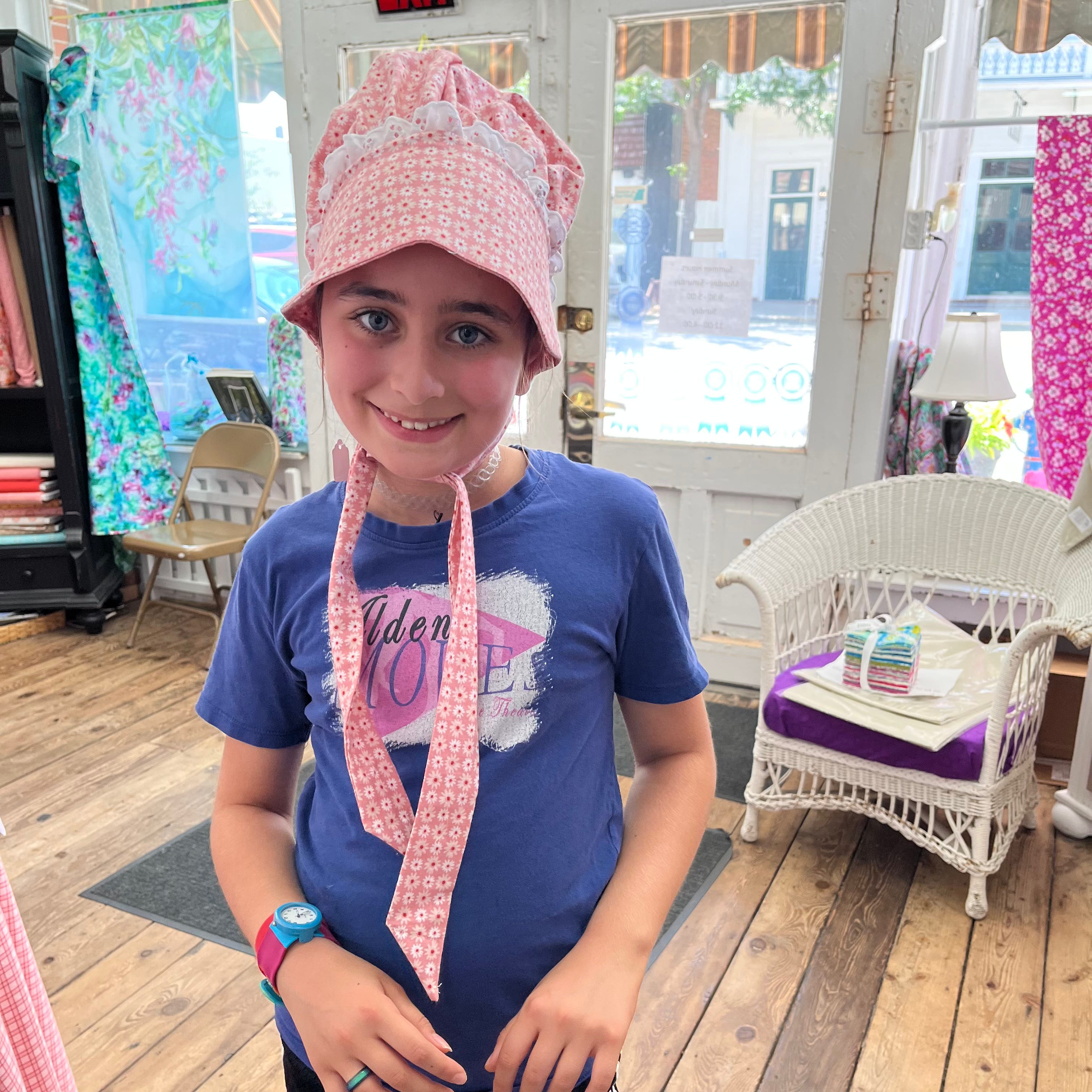
My children (I have three) have always been involved in my writing, to different degrees. When I was working on my biography of Shirley Jackson, who literally wrote notes in the kitchen while her children played around her, my older two enjoyed Jackson’s humorous stories about her own children, such as “Charles,” in which her eldest son comes home from kindergarten talking about a misbehaving boy who may or may not exist. Once, early in my project, I was checking Jackson’s memoir Raising Demons out of the library with the two of them in tow. The guy at the desk looked at the book, at them (around five and seven at the time), and finally at me. “Is it a how-to manual?” he quipped, deadpan.
But I’ve never before brought a child on a research trip. My usual M.O. is to squeeze the maximum amount of work possible into every day so as to be away from home no longer than necessary. And my trips usually involve either hours on end in archives or back-to-back interviews—not the most child-friendly activities.
Still, as I planned this trip to Hannibal for last summer, it began to seem not only feasible but necessary to bring my daughter. Unlike me, she could participate in the events designed for kids. And she could come along to the interviews, since I would be speaking with teens. She might even have something useful to say.
We spent two days in St. Louis before heading upriver to Hannibal. Exhausted on the first night, we had dinner at the most convenient spot—Ballpark Village, a complex of restaurants by the entrance to Busch Stadium, around the corner from our hotel. Looking it up later, I was chilled to learn that it’s the site of a former slave market.
We went to the famous arch first thing the next morning, and it was as beautiful as I expected. Mark Twain would have loved it—a marvel of engineering, different from every angle. My daughter ran around in the grass as I took pictures. On a warehouse across the river, someone had graffittied the words “Writing History” on the wall beneath the Casino Queen hotel.
We stopped by a plaque next to the water. St. Louis began as a fur trading post; from the 1830s to the 1850s—Twain’s early years—it was the third busiest port in the United States. “ ‘Steamboats waiting to load and unload their cargo lined up for miles along the Mississippi River,’ ” I read aloud from the plaque.
“Can you guess what that cargo was?” I asked my daughter.
“Food?” she wondered.
“Slaves,” I told her.
There was a pause. “Were slaves threatened?” she asked.
“They were treated very cruelly and were beaten if they didn’t work hard enough,” I said.
“Might they be killed?”
“Yes. But their owners also kept them alive to exploit them for their labor. One of the cruelest things slave owners did was separating families. They might sell a person’s spouse or children to someone else and that person would never see their family again.”
Her eyes widened. In a small pond nearby, a mother duck paddled with four ducklings in a row.
Later, we visited the courthouse, which has a large exhibit devoted to the case of Dred Scott and his wife, who famously sued for their freedom. My daughter, who had recently finished a school project celebrating Justice Ruth Bader Ginsburg, was stunned to learn that the Supreme Court decided against Scott in 1857. “[Blacks] had no rights which the white man was bound to respect; and … the negro might justly and lawfully be reduced to slavery for his benefit,” Chief Justice Roger B. Taney wrote in his decision.
“If you were living then, could you buy as many slaves as you could and set them free?” my daughter asked.
“Yes,” I said. “But it would be more important to work to end slavery politically. You can do only so much as an individual.”
I mentioned that we had eaten dinner at the site of a former slave market without realizing it. “Is that good or bad?” she asked.
“A little of both,” I said. “It’s right to move on. But it’s also important to remember the past.”


Before heading to Hannibal, we also visited the Griot Museum of Black History, the Mary Meachum Freedom Crossing (honoring a free Black woman who taught enslaved people to read and write and helped them escape), and Ulysses S. Grant’s birthplace. None of this made it into my essay about the Tom and Becky competition, which just came out in The American Scholar.
But it was all in the back of my mind as we spent the next few days hanging out with the contestants. I was beginning to understand that the project I was working on wasn’t just about Mark Twain, but would use him and his work as a lens into the contested history of our country and the way that history is commemorated.
In Hannibal, I found all the commercialism off-putting (there’s the Mark Twain Dinette, Becky’s Old Fashioned Ice Cream Parlor, the Mark Twain Casino and Riverboat, and much more), but my daughter loved it. She could have spent hours just in Clemens General Store, examining the old-time board games, puzzles, novelty salt and pepper shakers, and dozens of flavors of salt-water taffy. “They have everything anyone could want,” she breathed, awestruck. While I was taking notes, she devoured most of the fudge samples, to the horror of the clerk at the counter.
We met at least a dozen present and former Toms and Beckys, often at Java Jive, a cafe in the center of town featuring sugary caffeinated drinks made out of something called “lotus.” My daughter mostly sat and read, or played on her iPad, while I conducted the interviews. But I could tell she was listening.
I didn’t see what that meant, though, until the frog jump. The competition took place on a blindingly hot day, and the frogs turned out to need more encouragement than one would expect. Some tried to escape, but most lay there pathetically, legs splayed, looking confused. “It’s too hot for this!” a dad complained as a cute blond boy around five tried unsuccessfully to get his frog to move.
My daughter and I were hanging out with the newly anointed Tom and Becky in front of the cooling fan when a man I didn’t recognize addressed me out of the blue. “How’re you liking Hannibal? Pretty different from New York?” he asked without introducing himself.
I responded with something noncommittal.
“It’s pretty gross,” he volunteered.
I looked at the kids handling the frogs, which they didn’t seem to find particularly gross. Frog 91 was currently on the lily pad. My daughter’s number was 118. All I could think about was how eager I was for her to take her turn so we could find some shade.
An older guy, maybe the grandfather of the kid with frog 91, yelled “Boo!” at the frog. It didn’t move.
“Inhumane,” my interlocutor added.
When he said that, everything shifted. My daughter, hearing him, felt it too.
“It’s frog torture,” she said slowly. “You’re scaring the frog to make it move.”
It was inhumane. Once I saw it, I couldn’t unsee it. Incredibly, my first reflex was to defend this bizarre ritual. I didn’t want my daughter to feel guilty—after all, this whole thing was my idea. It was a Hannibal tradition, sponsored by the Boy Scouts, and what could be more wholesome than that? Maybe the frogs weren’t really suffering. Anyway, the event only lasted a short time.
It’s absurd to compare a frog-jumping contest to the institution of slavery. A frog isn’t a person. But there was something not entirely dissimilar about the dynamic underlying it: a system that cruelly exploits a powerless being for someone else’s profit and enjoyment. (Afterward, still upset, my daughter suggested that the real frogs could be replaced with electronic ones. I tried to picture the reaction if someone suggested that, especially an interloper from New York.)
Even more than that, I saw how easy it was to get swept up in such a system. With virtually no encouragement, I rented a frog for my own child to torture! But I also saw how little it took—literally, the questioning voice of a single person—to make it clear what was really going on.
Have you ever been to Tom Sawyer Days, or a festival like it? What do you think about the intersection between nostalgia and history in America today, especially with the 250th anniversary festivities that are going on this summer? Let me know in the comments.


P.S. On writing while parenting
Hearing my daughter question this Hannibal tradition on our trip reminded me that my writing really does benefit from having my kids around, even when it feels impossible to balance the two.
If you’re a parent trying to protect your creative life amid the chaos of family, I’m hosting a single-session workshop designed for you: “Write Like a Mother: Finding Your Voice After Having Children” (July 25, 1–3 p.m. Eastern). Rather than treating family life as a hurdle to clear before you can write, we will reframe motherhood as a creative asset.
In this session, we will:
Borrow from the masters to understand how brilliant mother-writers like Audre Lorde, Ursula K. Le Guin, and Shirley Jackson integrated parenting and profound art.
Get practical by mapping out actionable strategies for protecting your time and organizing your work when life is unpredictable and exhausting.
Find your forward motion and build a roadmap to keep your projects alive, no matter what phase of parenting you’re in.
Secure your spot and sign up here. A limited number of scholarships are available.
P.P.S. Come see me in person!
New York, July 26, 2 p.m. I’m joining forces with my brilliant friend Heather Clark for a live conversation. Heather is the acclaimed author of Red Comet: The Short Life and Blazing Art of Sylvia Plath and, most recently, the stunning novel The Scrapbook, a moving exploration of how the aftermath of the Holocaust ripples through generations. We’ll be diving into history, fiction, and the writing life. Free! Full details and registration here.
Will there be any chance be an opportunity to buy a recorded viewing of your Write Like a Mother workshop? I have been looking longingly at it for a week but will traveling at that date and time. . . .
The frogs! Amphibians are having a hard enough time in this world without being subjected to cruel treatment like this. At least the contest could have been held in the shade for the sake of the human participants as well as for the frogs, who need to keep their skin moist. But it's the same old scenario, being repeated over and over all around the world: animals being treated as objects that have been placed on earth solely for our amusement.
Also Ruth, shouldn't you have written "I *took* my nine-year-old on a research trip?" Bring and take - one of my pet peeves.